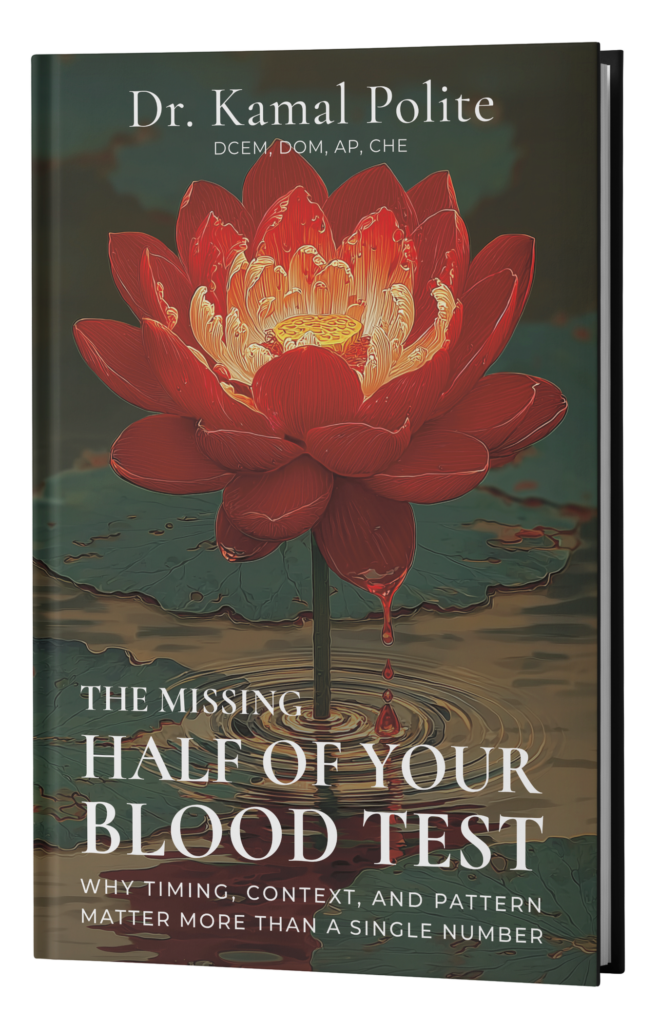
Newest Release: The Missing Half of Your Blood Test


OHO Publishing · Press & Media Kit
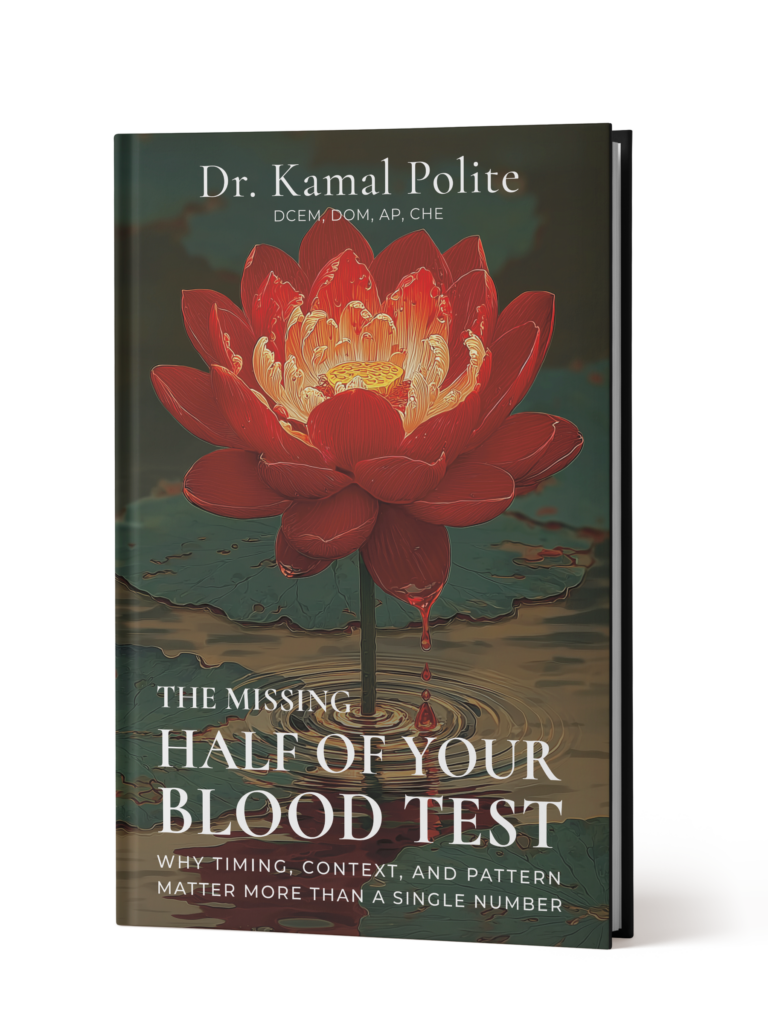
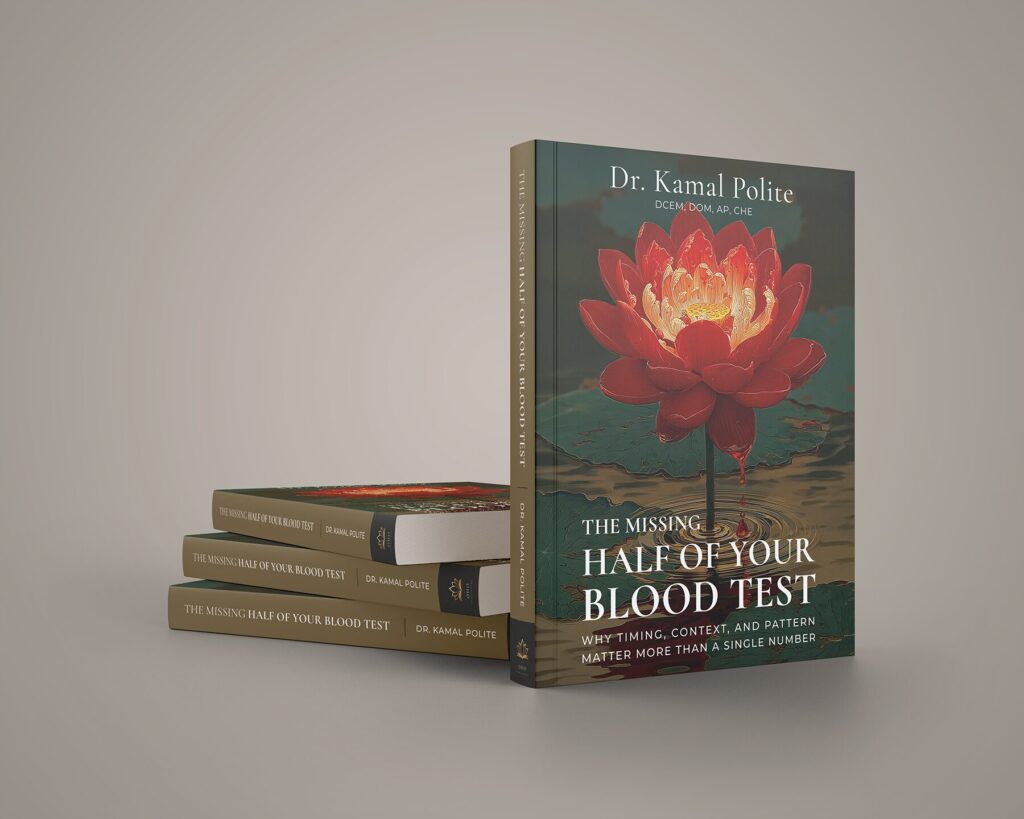
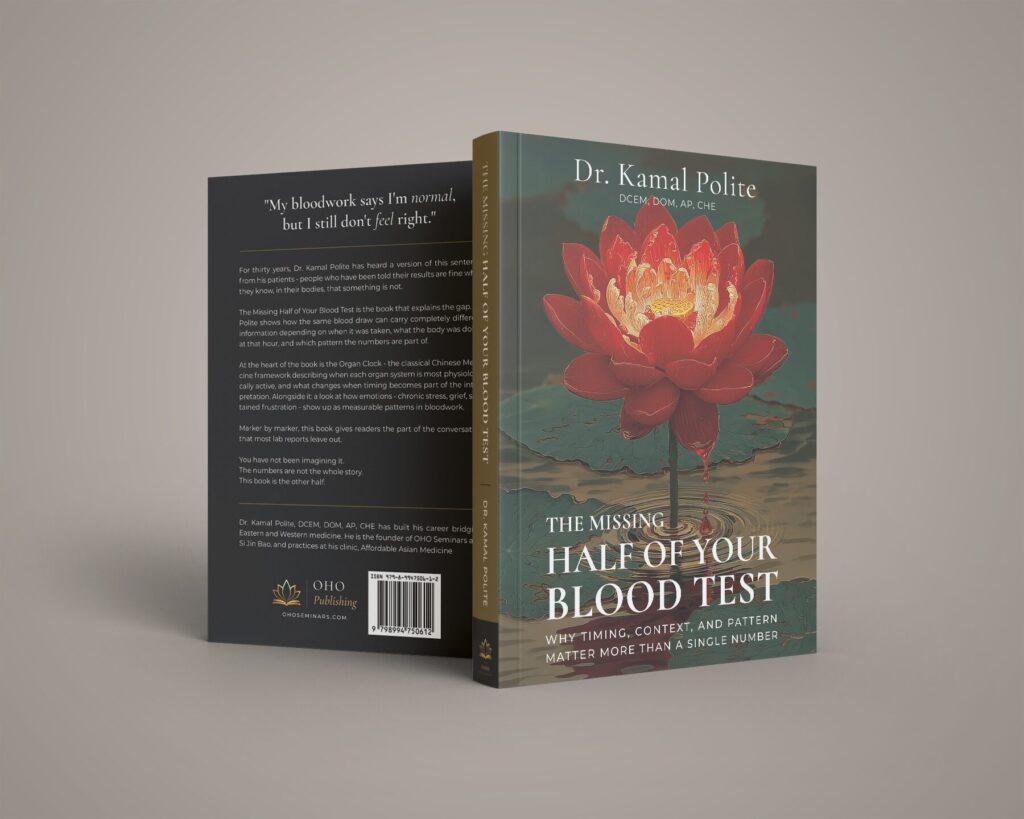
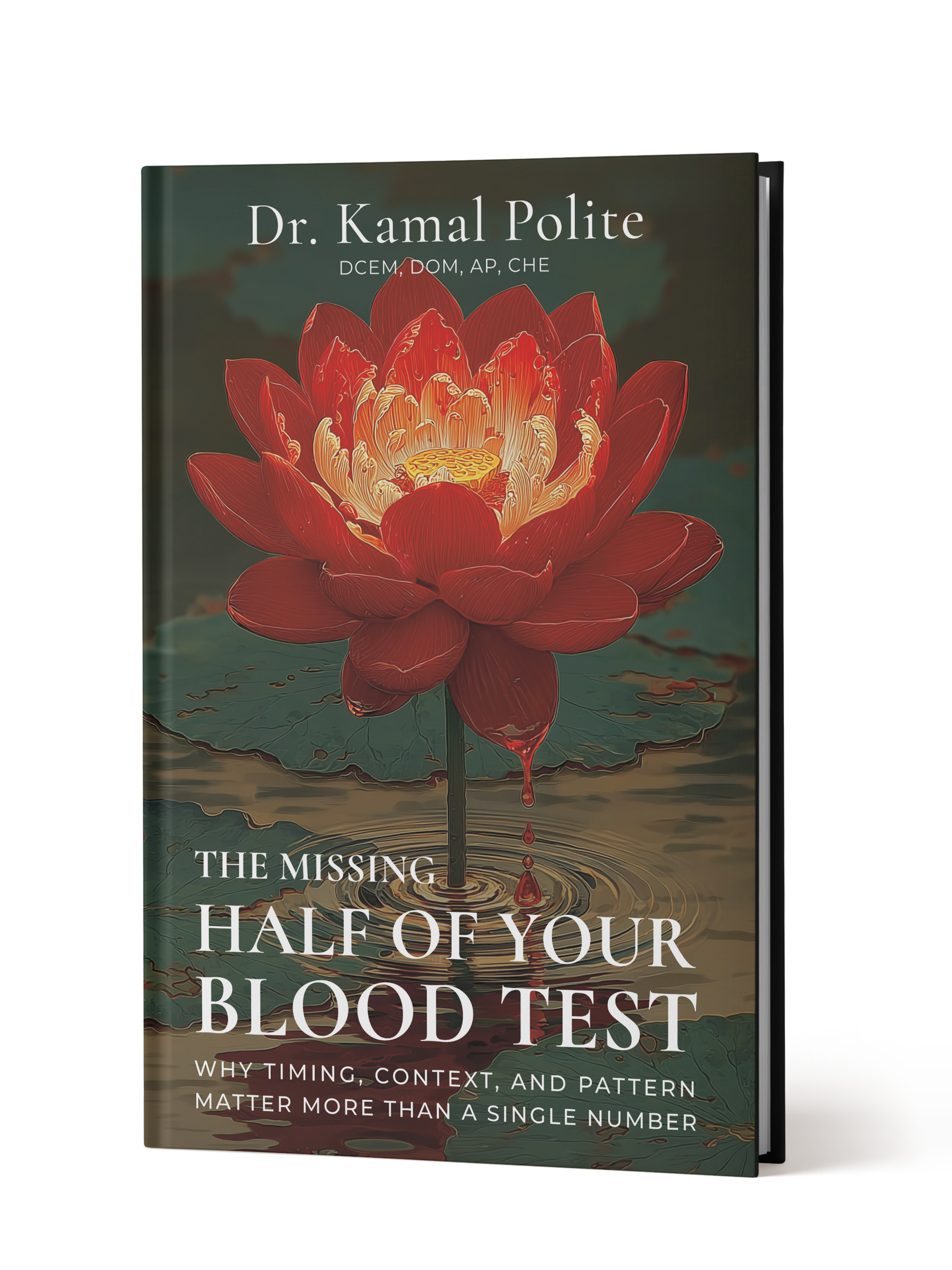
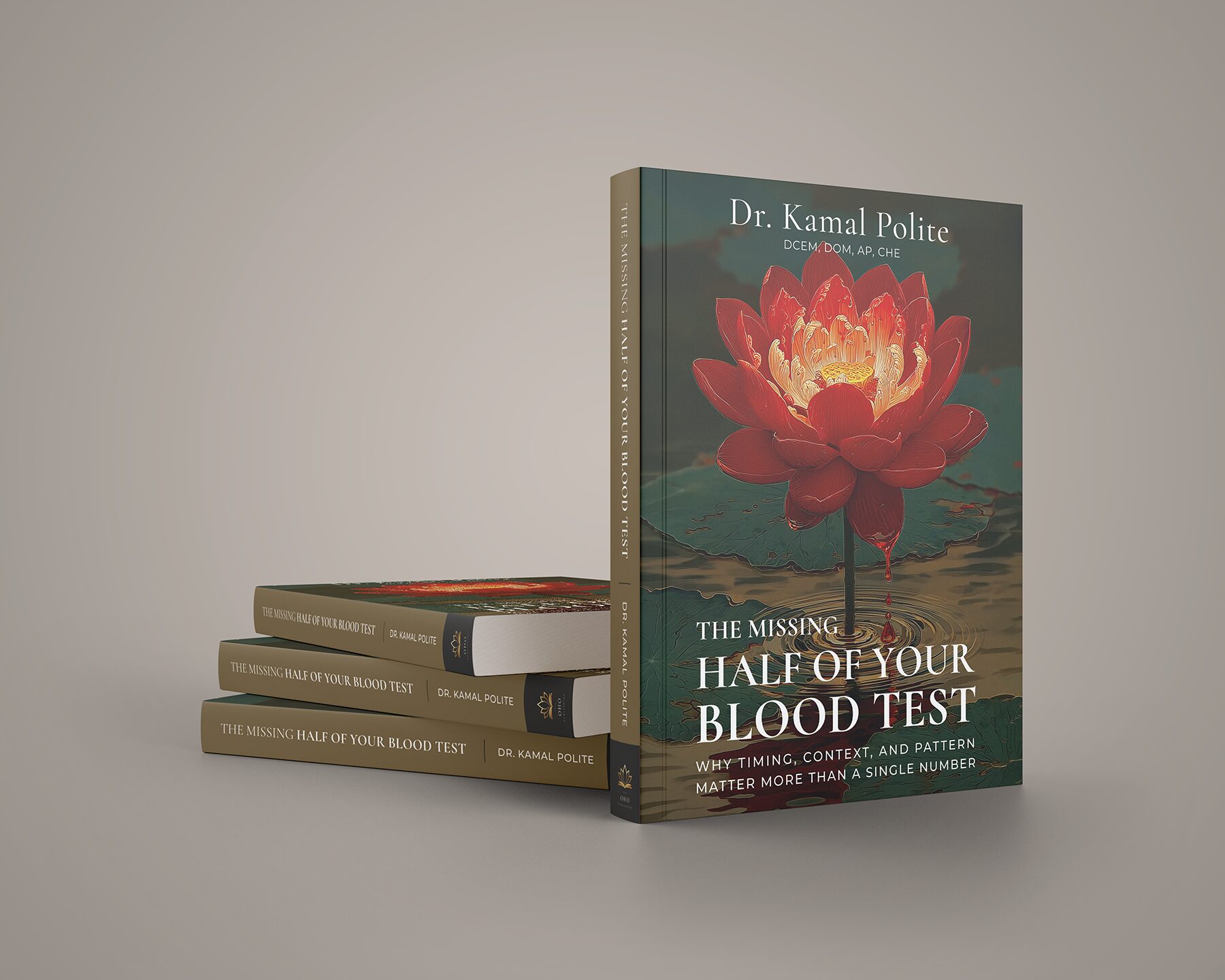
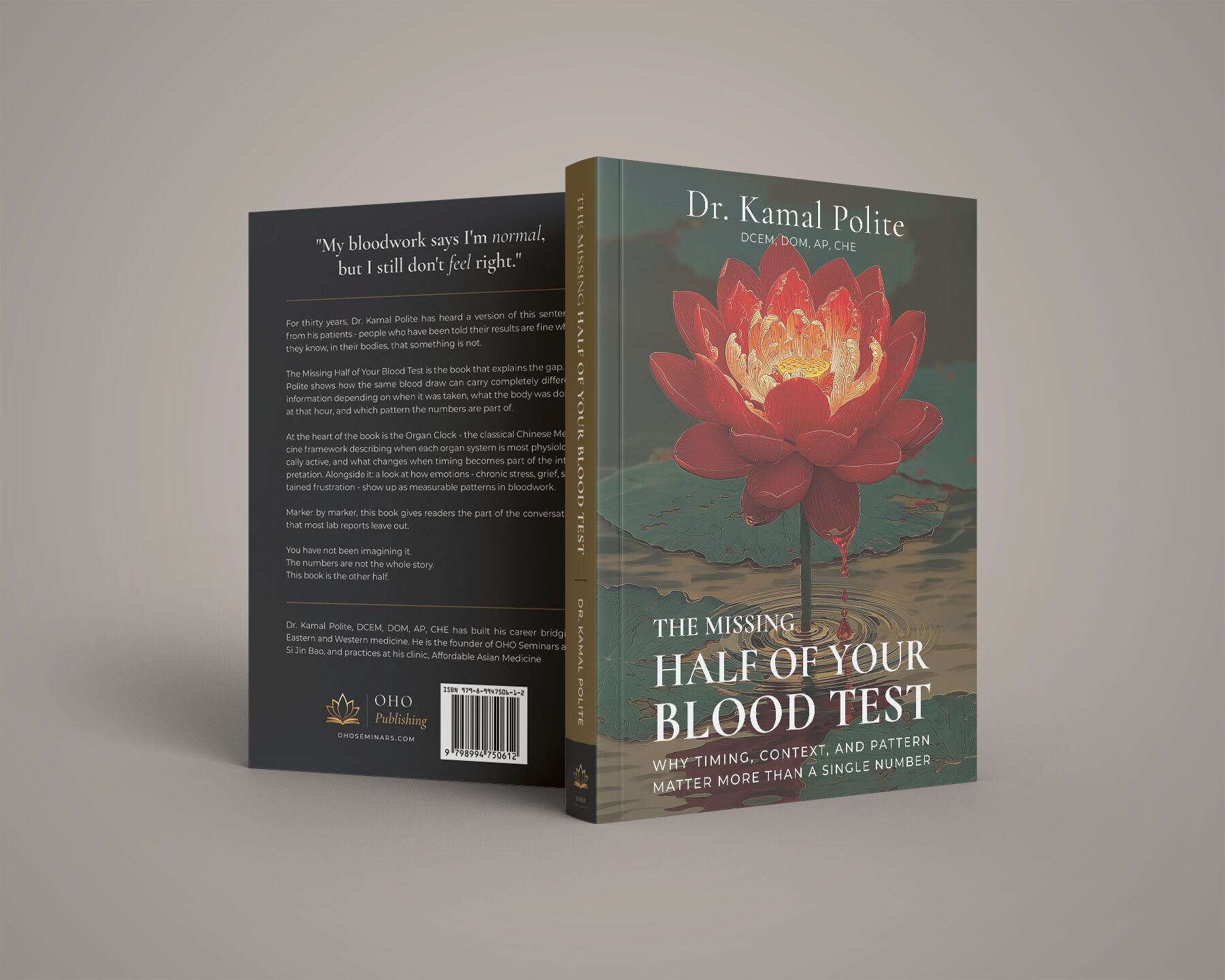
The Missing Half of Your Blood Test
Why timing, context, and pattern matter more than a single number.
Dr. Kamal Polite, DCEM, DOM, AP, CHE · License AP936
ISBN 979-8-9947506-0-5 · 200 pp · eBook · Paperback
01 — At a Glance
Quick Facts
Use these for catalog listings, retail copy, and editorial sidebars.
TITLE
The Missing Half of Your Blood Test
Author
Dr. Kamal Polite, DCEM, DOM, AP, CHE
SUBTITLE
Why Timing, Context, and Pattern Matter More Than a Single Number
Imprint
OHO Publishing
PUBLISHING DATE
May 23, 2026
Format
Paperback · eBook
Pages
218 pp · 6 × 9 in.
Price
$34.99 USD (HC) · $14.99 (eBook)
ISBN PRINT
979-8-9947506-1-2
Ebook ISBN
979-8-9947506-0-5
Categories
Health & Wellness · Integrative Medicine · Eastern Philosophy
Distribution
Amazon Kindle, Apple Books, Kobo, Barnes & Noble Nook, Independent Wellness Bookstores
02 — About the Book
Synopsis
Cleared for use in catalog copy, jacket flap text, and review excerpts.
The Premis
“The blood test does not lie. It tells you exactly what the body has been living. The question is whether anyone in the room is trained to hear it.”
Every year, millions of Americans receive a printout of numbers from a routine blood test and, more often than not, are told those numbers are normal. They are sent home with a clean bill of health and the quiet, lingering sense that something has still gone unread.
In The Missing Half of Your Blood Test, Dr. Kamal Polite, a Florida-licensed Acupuncture Physician and Doctor of Chinese Energetic Medicine with over thirty years in practice and clinical training at Yuhuangding Hospital in Shandong, makes a careful, exact case that the Western laboratory panel is only part of what the body is saying. What is often missing is not more data, but timing, context, and pattern.
Drawing from both Western laboratory science and Chinese Medicine, Dr. Polite demonstrates how laboratory values can be understood more completely when interpreted within the rhythms of physiology rather than as isolated measurements. The result is a book that does not ask Western medicine to step aside, but invites a fuller reading of what the body has already begun to express.
03 — The Author
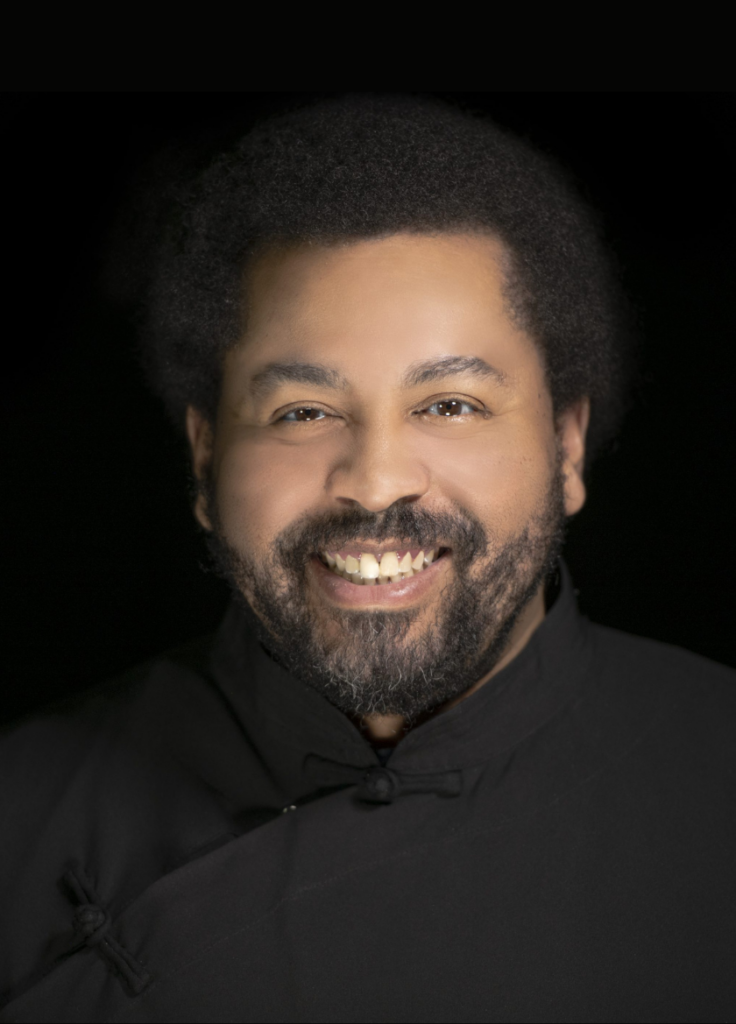
About Dr. Kamal Polite
Cleared for use in catalog copy, jacket flap text, and review excerpts.
Short bio
~ 50 Words
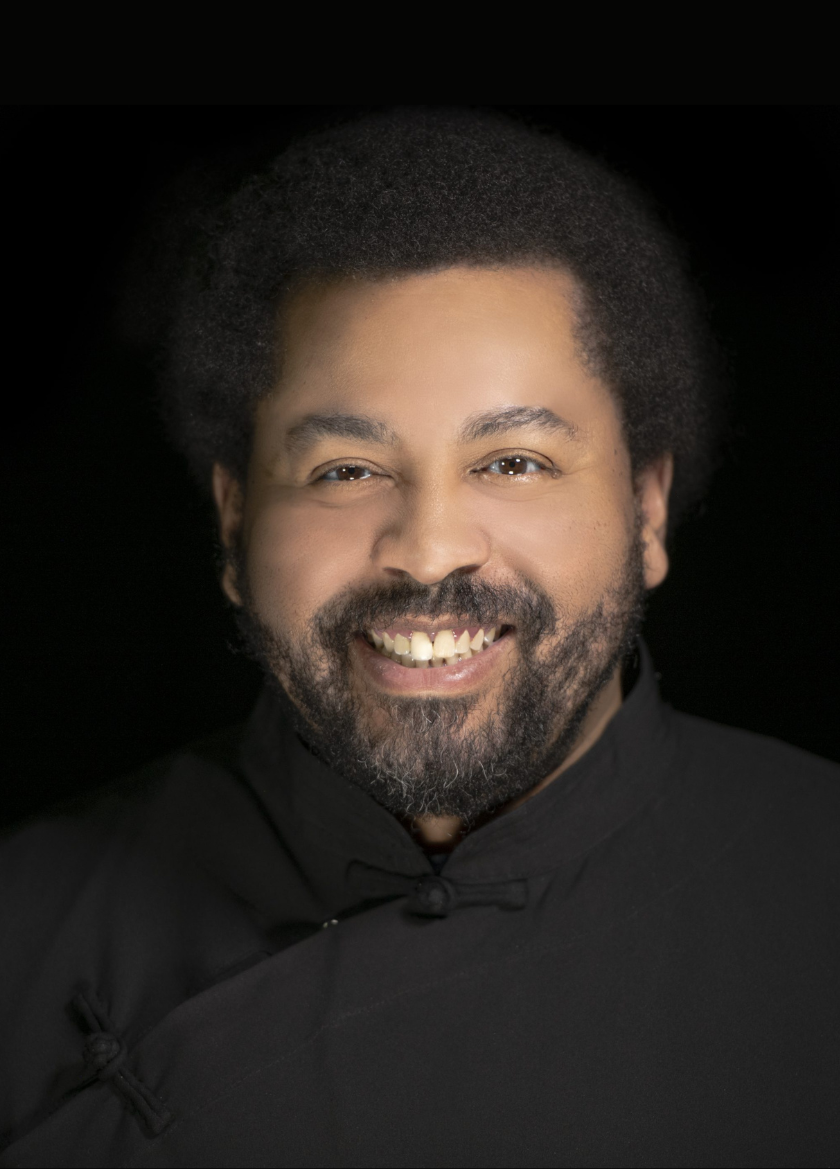
Dr. Kamal Polite, DCEM, DOM, AP, CHE is a Florida-licensed Acupuncture Physician with thirty years of clinical experience. Founder of OHO Seminars, OHO Publishing, and the herbaceutical company Si Jin Bao, he practices at his clinic, Affordable Asian Medicine, in Cocoa Beach, Florida. His newest book is The Missing Half of Your Blood Test.
Medium bio
~ 150 Words
Dr. Kamal Polite, DCEM, DOM, AP, CHE is a Florida-licensed Acupuncture Physician with thirty years of clinical experience. He trained at Yuhuangding Hospital in Shandong Province in 1996 and has spent his career translating classical Chinese Medicine for modern Western practitioners and patients.
He is the founder of OHO Seminars, his training platform for patients and practitioners alike, and OHO Publishing, the imprint behind his books and clinical guides. He is also the founder and Chief Herbaceutical Engineer of Si Jin Bao, an herbaceutical company that has served practitioners and patients in sixteen countries for more than twenty years. He practices at his clinic, Affordable Asian Medicine, in Cocoa Beach, Florida.
His newest book, The Missing Half of Your Blood Test (OHO Publishing, May 2026), examines what conventional lab work measures and what classical diagnosis sees in the same patient — and why the timing, context, and pattern behind a number often matter more than the number itself.
Long bio
~ 300 Words
Dr. Kamal Polite, DCEM, DOM, AP, CHE is a Florida-licensed Acupuncture Physician with thirty years of clinical experience. He holds a Doctorate of Chinese Energetic Medicine and has spent his career translating its classical principles for modern Western practitioners and patients.
In 1996, he trained at Yuhuangding Hospital in Shandong Province, China, where Western medicine and Traditional Chinese Medicine were practiced alongside each other as standard primary care. The experience shaped the way he has worked ever since: reading the body as a dynamic, interconnected process rather than a set of isolated numbers, and treating the timing of a symptom as clinical information in its own right.
He is the founder of OHO Seminars, his training platform for patients and practitioners alike, and OHO Publishing, the imprint behind his books and clinical guides. He is also the founder and Chief Herbaceutical Engineer of Si Jin Bao, an herbaceutical company that has served practitioners and patients in sixteen countries for more than twenty years. He practices at his clinic, Affordable Asian Medicine, in Cocoa Beach, Florida, and over the course of his career he has worked with more than forty thousand patients.
His newest book, The Missing Half of Your Blood Test (OHO Publishing, May 2026), grew out of a question he has heard from patients for three decades: “My bloodwork says I’m normal, but I still don’t feel right.” The book examines what conventional laboratory work measures and what classical Chinese diagnosis observes in the same patient — and why the timing, context, and pattern behind a value often matter more than the value itself. At its center is the Organ Clock, the clinical framework describing when the body’s organs are most physiologically active, and what changes about reading a blood test when the hour it was drawn becomes part of the interpretation.
04 — Origin Story
Why he wrote this book
An author’s note on the clinical observations behind the book.
2026
Cocoa Beach, FL Affordable Asian Medicine
A thyroid patient — a woman in her 40s — came into Dr. Polite’s clinic with detailed questions about her recent blood test results. She wanted to understand what her numbers actually meant. Dr. Polite answered as completely as he could in the time they had together.
But after she left, he kept thinking about the conversation. There was more she had needed to know — context her standard report had not provided, framework she had not been offered, language that would have helped her advocate for herself. And he realized this conversation was not happening for most patients.
So he sat down to write the conversation he wanted her to have. That conversation became The Missing Half of Your Blood Test.
05 — Interview topics
Topics Dr. Polite can speak to
Click any topic to expand. Dr. Polite is available for podcast interviews, panel discussions, broadcast media, and live events. He can speak with depth and accessibility to all of the following.
Why "within range" doesn't always mean well
The gap between lab results and lived experience, and what it actually means when patients are told there’s nothing wrong but continue to feel unwell.
The time-of-day problem in blood testing
Why the hour your blood was drawn affects what the numbers mean, with specific examples from cortisol, TSH, testosterone, CRP, and other panels.
Organ Time vs. Meridian Time
The clinical distinction between two systems often confused in online resources, and why Organ Time aligns with Western physiology in ways Meridian Time does not.
Reading your CBC, CMP, and lipid panels
What standard blood panels actually measure, what they miss when read in isolation, and how integrative practitioners interpret them in context.
Why you wake up at 3 AM
The Liver window in classical Chinese Medicine, the biology of nocturnal awakening, and what consistent early-morning wake patterns suggest about underlying physiology.
Cortisol, stress, and modern hormone testing
Why a single morning cortisol value misses the actual clinical picture, and what timing-conscious testing can reveal that a single draw cannot.
The integrative-medicine moment
How a Florida acupuncture physician with classical Chinese Medicine training reads the same blood work Western Medicine physician does — and where the conversations meet.
Patient advocacy and self-knowledge
How patients can use timing, symptom tracking, and informed conversation to advocate for more useful testing and interpretation from their physicians.
Training at Yantai Yu Huang Ding Hospital
Dr. Polite’s clinical training in Shandong Province and what hospital-integrated Chinese Medicine looks like in its country of origin.
Daoist medicine in clinical practice
What the Doctor of Chinese Energetic Medicine credential covers, how it differs from a standard acupuncture license, and why lineage matters in classical Chinese Medicine.
06 — Sample Excerpt
From the Author's Note
Pre-cleared for review excerpts up to 500 words. Please link back to ohoseminars.com/press/missing-half.
The opening Author’s Note from The Missing Half of Your Blood Test, available for direct excerpt in coverage. Full excerpt available as PDF download below.
These pages were written for patients who have been told their blood tests are “within range,” yet continue to experience unexplained symptoms that do not correspond with the interpretation of current Western medical standards.
Over the course of my clinical career, I have met countless patients who sensed that something in their body was not functioning according to their normal, even when standard laboratory testing failed to provide answers. Their frustration was rooted in not being heard within the current medical system — falling into the gap between lived experience and how laboratory data is commonly interpreted.
My training took place in both Western clinical environments and Chinese Medicine hospital systems, most notably during my time at 山东烟台 Yuhuangding Hospital in Yantai, Shandong, where I trained during the summer of 1996. There, I witnessed how timing, observation, and restraint shaped clinical outcomes as much as anatomy or pharmacology. Blood was not treated as static. It was approached as a moment in a moving body.
This book proceeds from that lived encounter. The chapters that follow will move through the most commonly ordered laboratory panels — the CBC, the metabolic panel, lipids, inflammatory markers, hormones — and show how each one reads differently when timing, context, and Organ Time are part of the interpretation. The goal is not to replace your physician’s analysis. It is to give you the part of the conversation that most lab reports leave out.
You have been handed a document that describes your body at one specific moment in time. This book is going to help you understand what that moment actually means — and what it cannot tell you on its own.
That is the missing half.
Author's Note continues in The Missing Half of Your Blood Test, available May 23, 2026.
07 — Quotable Lines from the Book
Pull quotes
Pre-cleared for editorial use. Please attribute to The Missing Half of Your Blood Test, OHO Publishing 2026.
“The missing half of most blood test interpretations is not more data — it is more context.”
Introduction
“Laboratory tests are time-stamped documents from a body in motion.”
Bonus Chapter · When to Draw Blood
“The blood test does not lie. It tells you exactly what the body has been living. The question is whether anyone in the room is trained to hear it.”
Chapter 1 · How Blood Tests Are Read
“The moment of collection is one of the most consequential variables in laboratory medicine, and it is almost never recorded in a way that informs interpretation.”
Bonus Chapter · When to Draw Blood
“Your blood was drawn at a specific hour. Your body was doing something specific at that hour. Both of those facts belong in the interpretation.”
Introduction
“Laboratory ranges describe boundaries, not health. They show where regulation holds — not how it feels to maintain it.”
Glossary & Reference
“You go in for blood work. The results come back. Everything is ‘within range.’ Your physician is reassured. You are told there is nothing to worry about. And yet — you still feel exactly the way you felt before you walked in. That gap — between what the numbers show and what your body is telling you — is not your imagination.”
Chapter 1 · How Blood Tests Are Read
“When your CRP is drawn at 8 AM and appears normal, but you have daily inflammatory flares at 4 PM, the body is telling you something the morning draw cannot hear.”
Bonus Chapter · When to Draw Blood
“Inflammation is not the enemy. When read clearly, it is the body signaling what it needs in order for healing to complete.”tells you which way the river is flowing.”
Chapter 5 · Inflammatory Markers
“This is not about doubting your laboratory results. It is about reading them with the precision they deserve.”
Bonus Chapter · When to Draw Blood
“A blood test is not a portrait of your health. It is a photograph taken at a specific moment, under specific conditions, by a camera pointed in one direction”
Chapter 1 · How Blood Tests Are Read
“Western Medicine and Chinese Medicine are not looking at different bodies. They are looking at the same body from different distances — and at different times of day.”
Chapter 1 · How Blood Tests Are Read
08 — Press Release
For Immediate Release
Consumer for lifestyle, health, and culture desks. Practitioner for trade, CE, and clinical press.
For Immediate Release
Your Blood Test Says You’re Fine. Why Don’t You Feel It?
In The Missing Half of Your Blood Test, Dr. Kamal Polite combines 30 years of clinical practice with classical Chinese Medicine to give patients the context their lab reports leave out — including the time of day the blood was drawn, and what their body was actually doing at that hour.
Winter Park, FL OHO Publishing
Winter Park, FL — May 23, 2026. A patient — a woman in her 40s — came into Dr. Kamal Polite’s clinic with detailed questions about her recent blood test results. She wanted to understand what her numbers actually meant. Dr. Polite answered as completely as he could in the time they had together.
But after she left, he kept thinking about the conversation. There was more she had needed to know — context her standard report had not provided, framework she had not been offered, language that would have helped her advocate for herself. And he realized this conversation was not happening for most patients. So he sat down to write the conversation he wanted her to have.
That conversation became The Missing Half of Your Blood Test: Why Timing, Context, and Pattern Matter More Than a Single Number. The book is written for the patient who has been told their labs are “within range” while continuing to feel that something is not right.
“The missing half of most blood test interpretations is not more data — it is more context.”
— DR. KAMAL POLITE
Dr. Polite, a Florida Board Certified Acupuncture Physician with 30 years of clinical practice and a doctorate in Chinese Energetic Medicine, has spent his career holding both Western biomedical training and classical Chinese Medicine in a single clinical framework. The book draws on that integrated perspective of something simple: blood test results describe the body at one specific moment in time, and the moment matters as much as the measurement.
Standard laboratory reports list hemoglobin, cortisol, glucose, CRP, and reference ranges. They flag values that fall outside those ranges. They do not, in most cases, indicate whether the timing of the draw captured the body at its peak, its trough, or somewhere in between — though physiological research has known for decades that the human body operates on a 24-hour rhythm that shifts almost every measurable value across the day. Cortisol can vary by a factor of five or six between morning and midnight. TSH peaks around 2 AM and reaches its low point in the mid-afternoon. Inflammation rises in the late afternoon. Iron concentrations shift between morning and evening, sometimes enough to change interpretation in borderline cases.
“The moment of collection is one of the most consequential variables in laboratory medicine,” Dr. Polite writes, “and it is almost never recorded in a way that informs interpretation.”
The book systematically walks through the most commonly ordered laboratory panels — the Complete Blood Count, the Comprehensive Metabolic Panel, lipid panels, inflammatory markers, hormones — and explains how each one reads differently when timing, context, and what classical Chinese Medicine calls Organ Time are factored into the interpretation. The goal, Dr. Polite makes clear, is not to replace a Western physician’s analysis. It is to give patients the part of the conversation that most lab reports leave out.
“The blood test does not lie. It tells you exactly what the body has been living. The question is whether anyone in the room is trained to hear it.”
— DR. KAMAL POLITE
Dr. Polite earned his Master of Oriental Medicine from Florida College of Integrated Medicine in 1997 and completed clinical training at Yantai Yu Huang Ding Hospital in Shandong Province, China. He went on to earn his doctorate in Chinese Energetic Medicine through the Bian Hua Gong Daoist Temple, completing the six-year doctoral program in 2025. He has spoken at M.D. Anderson Cancer Center of Orlando’s Physician and Nursing Grand Rounds, served as an invited speaker at the MIT Alumni Club of Orlando, and is the founder of OHO Seminars, an educational organization training both Eastern and Western practitioners as well as patients.
Across his career, Dr. Polite has cared for over 40,000 patients and developed clinical frameworks including the 12 Body Type System™, now taught to acupuncture physicians and integrative practitioners. He has authored twelve prior books rooted in The Body Type System™ and Navigating Nutrition curriculum. The Missing Half of Your Blood Test is the first book published under the OHO Publishing imprint, opening a new line on integrative laboratory interpretation for the lay reader.
For Immediate Release
TCM Physician Publishes Book Applying Organ Time to Conventional Blood Test Interpretation
Dr. Kamal Polite — Florida Board Certified Acupuncture Physician, Doctor of Chinese Energetic Medicine, and founder of OHO Seminars — releases The Missing Half of Your Blood Test, and makes the Organ Time framework — almost entirely absent from English-language resources — accessible to general readers alongside conventional lab interpretation.
Winter Park, FL OHO Publishing
Winter Park, FL — May 23, 2026. Dr. Kamal Polite, DCEM, DOM, AP, CHE, has published The Missing Half of Your Blood Test: Why Timing, Context, and Pattern Matter More Than a Single Number through OHO Publishing. The book is one fo the first systematic lay-audience treatments of laboratory interpretation that integrates Zi Wu Liu Zhu — classical Chinese Medicine’s Organ Time framework — with the standard panels Western medicine orders: CBC, comprehensive metabolic panel, lipid panel, inflammatory markers, and hormone panels.
Dr. Polite holds both a Master of Oriental Medicine from a U.S.-accredited TCM program and a doctorate in Chinese Energetic Medicine from the Bian Hua Gong (變化宮) Daoist Temple, completed in 2025. With thirty years of clinical practice, he has spoken at MD Anderson Cancer Center Orlando’s Physician and Nursing Grand Rounds and founded OHO Seminars, through which he has trained Eastern and Western practitioners — as well as patients and lay readers.
“The moment of collection is one of the most consequential variables in laboratory medicine, and it is almost never recorded in a way that informs interpretation.”
— DR. KAMAL POLITE
The book’s central argument is clinically straightforward: a single blood draw describes the body at one specific moment, and the diurnal physiology that shapes that moment is well-documented in Western medical literature but largely absent from how lab results are interpreted in standard practice. Cortisol varies by a factor of five to six across the day. TSH peaks around 2 AM and reaches its nadir in mid-afternoon. CRP follows a diurnal pattern that frequently peaks well after the morning draw. Iron concentrations shift between morning and evening. These variations are not minor and are documented in the medical literature, yet most laboratory reports do not record the hour of collection in a way that informs interpretation.
What distinguishes the book from existing integrative-medicine literature is its systematic application of Organ Time — the Zi Wu Liu Zhu sequence describing peak organ-system metabolic activity across the 24-hour day — to the panels practitioners actually see in clinical use. The book applies the Organ Time framework chapter by chapter to the CBC (Kidney window, 11 PM–1 AM), the metabolic panel (Liver window, 3–5 AM), lipids (Gallbladder window, 5–7 AM), inflammatory markers (Heart and Lung windows), and hormones (Pericardium and Spleen windows), demonstrating clinical patterns that emerge only when timing is considered alongside the values.
Notably, Dr. Polite distinguishes between Organ Time and the more commonly circulated Meridian Time sequence (which describes Qi flow through surface channel pathways and is offset from Organ Time by approximately two hours). The book makes clear that for laboratory interpretation, Organ Time aligns with Western physiological data on organ activity across the day — a distinction that has practical clinical implications most online resources do not articulate.
“The blood test does not lie. It tells you exactly what the body has been living. The question is whether anyone in the room is trained to hear it.”
— DR. KAMAL POLITE
The book is written for patients, but its framework is directly clinically applicable. Practitioners reviewing the manuscript before publication have noted its usefulness in patient education — particularly for clarifying why morning lab values may not reflect what the patient is experiencing later in the day, and for teaching patients to track symptom timing in ways that improve diagnostic precision. Acupuncture physicians, doctors of Chinese Medicine, and integrative-medicine practitioners will find this book useful as a patient resource and as a teaching aid in clinical practice.
Dr. Polite is a Florida Board of Acupuncture–approved Continuing Education Provider. He developed the proprietary 12 Body Type System™, taught through OHO Seminars to TCM physicians and integrative practitioners. Across his career he has cared for over 40,000 patients and is the Founder, CEO, and Chief Herbaceutical Engineer of Si Jin Bao, Inc., the herbaceutical company through which he has authored over 25 distinct herbal formulations.
09 — Downloadable Assets
High-res files
All assets pre-cleared for editorial use. Please credit OHO Publishing where possible.